Quick answer
Dentists can screen patients for obstructive sleep apnea risk, document relevant findings, and refer patients to a physician for diagnosis. When a physician prescribes oral appliance therapy, a qualified dentist can select, deliver, titrate, and monitor the appliance. Follow-up sleep testing is needed to confirm treatment effectiveness.
Obstructive sleep apnea for dentists is an important clinical topic because dental teams have regular access to patients who may not recognize their risk. Routine visits create opportunities to ask about sleep, review health history, and observe relevant oral or craniofacial features.
However, professional roles must remain clear. Dentists screen for risk and manage the dental component of prescribed oral appliance therapy. Physicians diagnose obstructive sleep apnea, direct medical treatment, and interpret treatment outcomes.
Why Obstructive Sleep Apnea Matters in Dental Practice
Obstructive sleep apnea, or OSA, is a common sleep-related breathing disorder. It causes repeated episodes of partial or complete upper-airway obstruction during sleep.
A global analysis estimated that 936 million adults have an apnea-hypopnea index, or AHI, of at least five events per hour. Of those adults, approximately 425 million may have moderate to severe OSA.¹
A 2026 analysis estimated that 22.8% of US adults met symptom-based criteria used as a proxy for OSA syndrome. The study also estimated $180.2 billion in annual US workplace productivity losses. However, the researchers relied on self-reported breathing pauses and excessive sleepiness rather than confirmed sleep-study diagnoses.²
Routine dental care gives dental teams repeated opportunities to identify possible risk. They can review medical history, ask screening questions, and document relevant clinical observations.
These findings do not diagnose OSA. Instead, they may support a timely medical referral.
What Is the Dentist’s Role in OSA Care?
A dentist’s role follows four practical steps:
- Screen patients for possible OSA risk.
- Refer at-risk patients for medical evaluation.
- Provide oral appliance therapy when prescribed.
- Monitor oral health, appliance use, and adverse effects.
The dentist’s scope and responsibilities in dental sleep medicine
Professional organizations support an interdisciplinary model in which qualified dentists participate in screening and oral appliance therapy. Physicians remain responsible for diagnosis and medical treatment planning.³
A recent JADA narrative review also supports a meaningful role for appropriately educated dentists. That role includes screening, referral, appliance selection, adjustment, monitoring, and communication with physicians.
PSG and home sleep apnea testing
How Dentists Can Screen for OSA Risk
OSA screening should be part of a consistent dental workflow. It should not depend on whether a patient fits a familiar stereotype.
Although obesity and loud snoring are important risk factors, OSA affects patients with different body types and symptom patterns.
When should dental practices screen?
Useful screening opportunities include:
- New-patient examinations
- Annual health-history updates
- Preventive hygiene visits
- Bruxism evaluations
- Temporomandibular disorder consultations
- Visits involving unexplained fatigue or poor sleep
- Occupation matters too: See our guide to sleep apnea and DOT certification
Which screening tools can dentists use?
Common screening tools include:
- STOP-Bang Questionnaire
- Berlin Questionnaire
- Epworth Sleepiness Scale
STOP-Bang is often practical in dental settings because it is brief and easy to score. It considers snoring, tiredness, observed breathing pauses, blood pressure, body mass index, age, neck circumference, and sex.
Scoring thresholds vary by population and protocol. Therefore, practices should adopt a defined scoring method. The result should be documented as a risk indicator, not a diagnosis.
The Epworth Sleepiness Scale measures daytime sleepiness. It may identify one symptom associated with OSA, but it should not be used alone to confirm or exclude the condition.
Oral and Craniofacial Findings Associated With OSA Risk
During a dental examination, clinicians may observe features associated with an increased risk of sleep-disordered breathing.
Examples include:
- Retrognathia or micrognathia
- A narrow maxillary arch
- A high palatal vault
- Tongue scalloping
- A large tongue
- Enlarged tonsils
- Limited visible oropharyngeal space
- Increased neck circumference
- Significant tooth wear
No single oral finding confirms OSA. Tooth wear, bruxism, tongue scalloping, or jaw discomfort should not be presented as diagnostic evidence.
Instead, clinicians should consider these observations alongside:
- Medical history
- Patient-reported symptoms
- Validated screening results
- Known comorbidities
Risk is identified through patterns, not one isolated finding.
A Simple Chairside Screening Workflow
A repeatable process helps the dental team screen patients consistently.
- Ask about snoring, fatigue, and observed breathing pauses.
- Use a validated questionnaire when indicated.
- Review relevant health conditions and medications.
- Record oral and craniofacial observations.
- Explain that screening does not establish a diagnosis.
- Refer the patient to a qualified physician when appropriate.
Suggested documentation language
Patient screened at elevated risk for obstructive sleep apnea based on questionnaire responses, health history, and clinical observations. Screening does not confirm a diagnosis. Medical evaluation and possible sleep testing were recommended.
Suggested patient language
Your screening result does not mean that you have sleep apnea. It suggests that further evaluation may be appropriate. A physician can determine whether sleep testing is needed.
Clear language reduces confusion and may support referral completion.
What Happens After a Patient Screens at Elevated Risk?
A screening result begins the referral pathway. It does not complete it.
The typical care process is:
- The dental team identifies possible risk.
- The dentist documents the findings.
- The patient is referred to a physician.
- The physician determines whether sleep testing is appropriate.
- OSA is diagnosed or ruled out through a medical evaluation.
- The physician recommends or prescribes treatment.
- The dentist provides OAT when prescribed.
- Follow-up testing evaluates treatment effectiveness.
Diagnostic testing may involve:
- In-laboratory polysomnography
- Home sleep apnea testing
Testing selection and interpretation remain within the medical care pathway.
Understanding OSA Severity
Clinicians commonly classify OSA severity using the AHI:
- Mild OSA: 5 to 14 events per hour
- Moderate OSA: 15 to 29 events per hour
- Severe OSA: 30 or more events per hour
These categories provide useful clinical context. However, treatment decisions should not rely on AHI alone.
A physician may also consider:
- Oxygen desaturation
- Daytime symptoms
- Cardiovascular risk
- Other health conditions
- Sleep architecture
- Patient preferences
- Previous treatment response
As a result, two patients with the same AHI may require different treatment plans.
When Oral Appliance Therapy May Be Appropriate
Oral appliance therapy, or OAT, is an established treatment option for appropriate adults with OSA.
A physician may prescribe OAT when:
- The patient prefers an oral appliance.
- Positive airway pressure is not tolerated.
- OAT fits the diagnosis and treatment plan.
- Combination therapy is appropriate.
The joint guideline from the American Academy of Sleep Medicine and the American Academy of Dental Sleep Medicine recommends considering oral appliances for adults with OSA who cannot tolerate continuous positive airway pressure or prefer an alternative.⁴
Disease severity is important, but it is not the only consideration. Patient selection should also account for anatomy, dental health, comorbidities, treatment preferences, and physician-directed planning.
How Oral Appliance Therapy Works
The most common oral appliances for OSA are mandibular advancement devices.
These appliances hold the lower jaw in a forward position during sleep. This position may stabilize the tongue and reduce upper-airway collapse.
OAT may:
- Reduce obstructive breathing events
- Improve daytime sleepiness
- Improve sleep-related quality of life
- Support consistent treatment use in selected patients
Positive airway pressure generally produces a greater reduction in AHI. However, some patients find an oral appliance easier to use consistently.
That does not mean the therapies are universally equivalent. Treatment response varies, so objective follow-up remains essential.
Dental Evaluation Before OAT
Before delivering an appliance, the dentist should complete a detailed dental evaluation.
The assessment may include:
- Periodontal health
- Tooth stability
- Available dentition
- Occlusion
- Temporomandibular joint function
- Mandibular range of motion
- Oral hygiene
- Restorative conditions
- Patient dexterity
- Ability to insert and remove the appliance
Possible contraindications or limitations may include active periodontal disease, inadequate tooth support, significant untreated dental disease, or major temporomandibular joint pathology.
The dentist should also review the diagnosis, prescription, and available sleep-study information.
Appliance Selection and Digital Workflow
A qualified dentist should select an appliance based on the prescription, patient anatomy, clinical needs, and treatment goals.
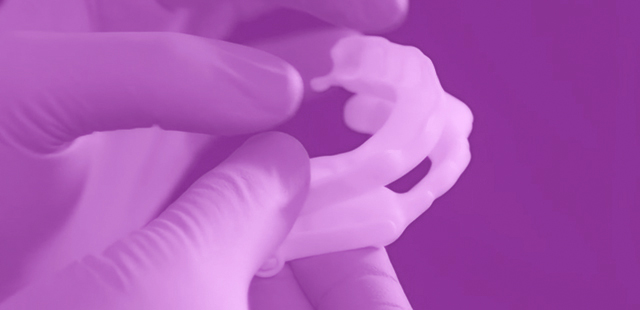
Panthera mandibular advancement devices use a digital design and manufacturing workflow. They are manufactured from approved medical-grade PA2200 nylon.
Digital production supports a consistent process from intraoral scanning through appliance fabrication. However, successful therapy still depends on:
- Appropriate patient selection
- Accurate clinical records
- Proper appliance delivery
- Careful titration
- Adverse-effect management
- Objective outcome testing
- Long-term follow-up
The appliance is one part of a coordinated treatment process.
Titration: Moving From Appliance Delivery to Therapy
Titration is the gradual adjustment of a mandibular advancement device.
The goal is to identify an effective position while maintaining comfort and dental stability.
The initial setting depends on:
- Appliance design
- Patient anatomy
- Mandibular range
- Comfort
- Clinical protocol
- Physician-directed treatment goals
Some published protocols begin within a range of 25% to 75% of maximum protrusion.³ However, this range should not be interpreted as a universal starting position.
The dentist should individualize treatment and advance the appliance gradually.
During titration, monitor:
- Patient comfort
- Subjective sleep quality
- Snoring reports
- Daytime sleepiness
- Appliance use
- Tooth or muscle tenderness
- Temporomandibular joint symptoms
- Morning bite changes
Symptoms can help guide titration. However, symptom improvement alone does not confirm treatment success.
Common OAT Adverse Effects
Early adverse effects are common and often manageable.
They may include:
- Tooth soreness
- Muscle tenderness
- Dry mouth
- Excess salivation
- Temporary morning bite changes
- Temporomandibular joint discomfort
Long-term occlusal changes can also occur. Therefore, dentists should monitor patients throughout treatment.
Persistent pain, reduced jaw function, progressive bite changes, or difficulty wearing the appliance requires reassessment.
Management may include:
- Appliance adjustment
- Slower titration
- Morning repositioning exercises
- An occlusal guide
- Temporary interruption of advancement
- Coordination with another dental or medical professional
Informed consent should explain both short-term and long-term risks before treatment begins.
Why Objective Sleep Testing Matters
A patient may feel better and still have clinically important respiratory events.
For this reason, symptom improvement should not serve as the only measure of success.
Once titration reaches a stable therapeutic position, the dentist should return the patient to the physician for efficacy assessment. Follow-up testing may involve polysomnography or home sleep apnea testing.
The dentist should communicate:
- Appliance type
- Current advancement setting
- Titration history
- Patient-reported response
- Adverse effects
- Reported appliance use
The physician then interprets the results and determines whether treatment goals have been met.
Objective follow-up distinguishes appliance delivery from a coordinated, outcomes-based OAT program.
What Counts as a Successful OAT Outcome?
Research studies use several definitions of oral appliance response.
Common measures include:
- AHI below 5 events per hour
- AHI below 10 events per hour
- At least a 50% reduction from baseline
These measures are research and clinical benchmarks rather than universal definitions of success.
The treating physician should interpret the result in context. Important factors include:
- Residual AHI
- Oxygen levels
- Symptoms
- Comorbidities
- Baseline disease severity
- Treatment use
- The original treatment goal
An AHI reduction may represent meaningful improvement without complete normalization. In other cases, residual disease may require further titration, another treatment, or combination therapy.
Long-Term Monitoring
OSA is a chronic condition. Therefore, OAT requires continued follow-up.
Patients should generally return:
- After appliance delivery
- During titration
- After reaching a stable setting
- After objective efficacy testing
- At least annually thereafter
Additional visits may be needed when symptoms, weight, health status, medication use, or dental conditions change.
At each follow-up, evaluate:
- Appliance condition
- Fit and retention
- Reported use
- Side effects
- Occlusion
- Periodontal health
- Temporomandibular joint function
- Changes in symptoms
- Need for medical reassessment
A return of snoring, fatigue, witnessed breathing pauses, or other concerns may indicate a need for repeat medical evaluation.
Managing bite changes during mandibular advancement therapy
Building an Interdisciplinary OSA Care Model
OSA is a medical condition with dental, respiratory, cardiovascular, metabolic, and behavioral considerations.
Depending on the patient, the care team may include:
- Sleep physicians
- Primary care clinicians
- Dentists
- Otolaryngologists
- Cardiologists
- Pulmonologists
- Endocrinologists
- Behavioral sleep specialists
The dentist’s responsibilities may include:
- Risk screening
- Medical referral
- Dental evaluation
- Appliance selection and delivery
- Titration
- Side-effect management
- Oral health monitoring
- Communication with the physician
The physician’s responsibilities include:
- Medical diagnosis
- Interpretation of sleep testing
- Medical treatment planning
- Assessment of comorbidities
- Verification of treatment efficacy
- Decisions about additional or alternative therapy
Clear communication reduces fragmented care and helps each clinician remain within an appropriate professional scope.
Emerging Opportunities in Digital Dental Sleep Medicine
Digital tools may expand the dentist’s role in coordinated OSA care.
Emerging areas include:
- Integration of intraoral scans with sleep data
- Objective appliance-use monitoring
- Remote patient follow-up
- Data-assisted titration
- Artificial intelligence–supported risk assessment
- Prediction of OAT response
These approaches remain at different stages of development. Therefore, they should not replace established diagnostic pathways or objective outcome testing.
However, they may eventually support more individualized treatment and stronger communication across the care team.
A Practical Dental OSA Workflow
A well-organized dental sleep medicine program can follow this structure:
- Screen consistently.
- Document risk clearly.
- Explain the limits of screening.
- Refer for medical diagnosis.
- Review the physician’s diagnosis and prescription.
- Complete a dental evaluation.
- Select and deliver the appliance.
- Titrate gradually.
- Monitor adverse effects.
- Return the patient for objective efficacy testing.
- Continue long-term dental follow-up.
- Communicate significant changes to the physician.
This process supports patient safety, professional scope, and continuity of care.
Conclusion
Obstructive sleep apnea is common, costly, and frequently missed. Dental practices can help identify patients who may benefit from further evaluation.
Dentists do not diagnose OSA. Instead, they screen for risk, make appropriate referrals, and manage the dental component of prescribed oral appliance therapy.
A strong workflow for obstructive sleep apnea for dentists includes:
- Consistent screening
- Clear documentation
- Medical referral
- Careful appliance selection
- Gradual titration
- Adverse-effect monitoring
- Objective treatment verification
- Long-term collaboration
When these steps work together, dentistry becomes an important partner in coordinated sleep medicine.
References
- Benjafield AV, Ayas NT, Eastwood PR, et al. Estimation of the global prevalence and burden of obstructive sleep apnoea: a literature-based analysis. Lancet Respir Med. 2019;7(8):687-698. doi:10.1016/S2213-2600(19)30198-5.
- Rehman U, Ahn Y, Yerushalmi E, et al. Neglected burden of obstructive sleep apnoea: workplace productivity loss in the USA and UK. Thorax. Published online February 24, 2026. doi:10.1136/thorax-2025-223550.
- Glick A, Chiang HK, Huynh N, Levine M. Dentistry’s role in the evidence-based management of adult obstructive sleep apnea: a narrative review. J Am Dent Assoc. Published online 2026. doi:10.1016/j.adaj.2025.12.020.
- Ramar K, Dort LC, Katz SG, et al. Clinical practice guideline for the treatment of obstructive sleep apnea and snoring with oral appliance therapy: an update for 2015. J Clin Sleep Med. 2015;11(7):773-827. doi:10.5664/jcsm.4858.
Related Dental Sleep Medicine Resources
Continue exploring the clinical, administrative, and business systems that support a successful dental sleep medicine program.
Medical Billing for Dental Sleep Medicine Dentists
Medical billing can be one of the most challenging parts of building a dental sleep medicine program. In this article, Randy Curran explains the importance of documentation, benefits verification, workflow management, and clear financial communication.
Continue reading: Medical Billing for Dental Sleep Medicine: What Dentists Need to Know
How to Build a Scalable Dental Sleep Medicine Practice
Growth requires more than adding oral appliance therapy to an existing dental workflow. This article explores the staffing, systems, referral relationships, training, and operational processes that can help a dental sleep medicine program grow more consistently.
Continue reading: How to Build a Scalable Dental Sleep Medicine Practice