Informed consent for oral appliance therapy should include a clear, practical discussion of bite changes before mandibular advancement therapy begins. The goal is not simply to secure a signature. The goal is to help the patient understand how treatment works, what tradeoffs may come with it, and why follow-up is part of responsible care.
That is especially important when discussing mandibular advancement devices for obstructive sleep apnea. Dentists who provide oral appliance therapy know that occlusal changes are a documented long-term side effect of treatment. The challenge is not whether to mention them. The challenge is how to explain them clearly, calmly, and professionally so patients understand the issue without becoming unnecessarily alarmed.
Dr. John Viviano’s clinical framing is useful here. When oral appliances are properly delivered, short-term side effects may be “mostly short lived, during the initial adjustment period,” and may include “abnormal dental occlusion in the morning, masticatory muscle tenderness and temporo-mandibular joint discomfort and/or stiffness.” He then makes the long-term distinction that should shape the consent conversation: “Long term side effects mostly revolve around bite changes.”7
That distinction gives dentists a practical way to structure the conversation. Explain what patients may notice early. Explain what may develop gradually over time. Then explain how the practice will monitor the bite throughout therapy.
When this conversation is handled well, informed consent becomes more than a protective document. It becomes the first step in long-term management.
Read this for a deeper understanding of managing bite changes in mandibular advancement therapy Managing Bite Changes in Mandibular Advancement Therapy: A Clinical Guide for Dentists.
This article is intended as clinical communication guidance, not legal advice. Dental practices should follow their own professional, regulatory, documentation, and risk-management requirements for informed consent.
Why Bite Changes Must Be Part of Informed Consent
Bite changes should be included in informed consent because they are a known treatment effect of long-term oral appliance therapy. Studies of mandibular advancement devices have documented reductions in overjet, reductions in overbite, and changes in occlusal contacts across years of use.2-6
The exact magnitude and timing vary by patient and by study design. Some changes may be mild and well tolerated. Others may be more clinically meaningful. The point is not to predict the exact outcome for every patient. The point is to explain the category of risk before treatment begins.
The 2015 clinical practice guideline from the American Academy of Sleep Medicine and the American Academy of Dental Sleep Medicine recommends that qualified dentists provide oversight of oral appliance therapy to monitor for dental-related side effects and reduce their incidence.1 That responsibility begins before the appliance is delivered. It begins when the dentist explains how the appliance works, what the patient may experience, and why follow-up is built into treatment.
More recent dental sleep medicine literature reinforces the same clinical expectation. Patient selection for oral appliance therapy and mandibular advancement devices requires dental and medical evaluation, including assessment of TMJ range of motion, occlusion, intraoral anatomy, airway anatomy, and possible contraindications such as active periodontitis or major TMJ pathology.8 The same review notes that occlusal changes are among the possible adverse effects of therapy, that ongoing monitoring supports early detection and management, and that informed consent involves educating the patient about potential adverse effects.8
In practical terms, the consent conversation should not focus only on benefits such as reduced snoring, improved tolerance compared with CPAP, or airway management goals. It should also explain the responsibilities that come with therapy. One of those responsibilities is monitoring how the bite responds over time.
To learn how often bite changes occur with oral appliance therapy read How Common Are Bite Changes with Oral Appliance Therapy? What Dentists Should Expect.
Why Patients Need More Than a Generic Warning
Many consent conversations fall short not because the dentist says nothing, but because the dentist says too little in a way the patient cannot use.
A vague statement such as “your bite might change a little” may technically mention the risk, but it does not give the patient a useful mental model. Patients may not understand what a bite change feels like. They may not know whether it happens right away or gradually. They may not know whether a morning change is temporary or whether it signals something that needs closer attention.
Generic warnings also tend to sound scripted. They may satisfy the dentist’s sense that the issue was mentioned, but they do not always create real understanding.
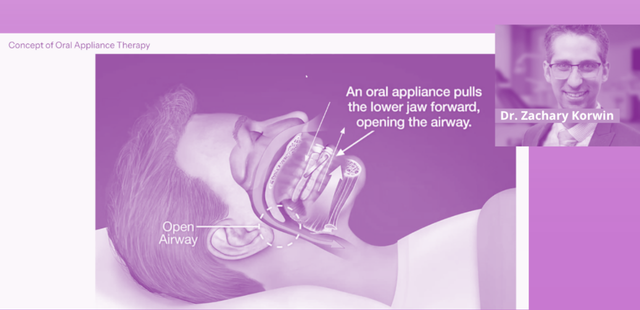
A better consent conversation connects the risk to the mechanism of treatment. The patient should understand that the appliance holds the lower jaw forward during sleep to help keep the airway open.8 The patient should also understand that repeated forward positioning can influence how the teeth fit together over time.2-6
That explanation does not need to be long. It simply needs to be clear enough that the patient understands three things:
- What the appliance does
- What they may notice
- Why the dentist will monitor the bite over time
When patients understand the “why” behind follow-up, recall visits feel less like an inconvenience and more like part of responsible care.
How to Explain Risk Without Discouraging Treatment
Some dentists worry that discussing bite changes directly will reduce case acceptance. That concern is understandable, but the larger problem is usually poor framing.
When risk is explained abruptly, defensively, or without context, it can sound alarming. When risk is explained as part of a calm, professional overview of therapy, it usually sounds responsible.
The key is balance.
Do not minimize bite changes as though they barely deserve attention. Do not present them as a sign that treatment is unsafe or likely to fail. Instead, explain that every treatment has tradeoffs. Oral appliance therapy is no exception. One known long-term tradeoff is the possibility that the bite may change over time.2-6
Then explain what the practice does about that risk.
You establish a baseline. You check the bite at follow-up visits. You ask specific questions. You compare findings over time. You respond when patterns become clinically meaningful.
A useful way to say this is:
“This appliance works by holding your lower jaw forward while you sleep. That helps your airway, but it can also affect how your teeth fit together over time. That is why we check your bite regularly during treatment.”
That explanation is direct, honest, and tied to the follow-up process. It does not hide the risk. It also does not exaggerate it.
To understand how to monitor occlusal changes during oral appliance therapy read How to Monitor Occlusal Changes During Oral Appliance Therapy: A Practical Workflow for Dentists.
Patient-Friendly Language for Discussing Bite Changes
The best consent language is plain, concrete, and short. Patients do not need terms like intercuspation, occlusal scheme, or anterior-posterior change unless those terms are translated immediately into everyday language.
They need to know what they may feel, what the dentist will check, and when they should report a change.
These examples translate the documented mechanism of mandibular advancement and the known possibility of occlusal change into patient-friendly language.2-8
What the dentist needs to explain |
Patient-friendly language
|
How the appliance works | “This appliance holds your lower jaw forward while you sleep to help keep your airway open.” |
Temporary morning bite change | “Your teeth may feel like they fit together differently when you first remove the appliance in the morning.” |
Long-term bite change | “Over time, the way your bite comes together can gradually change.” |
Monitoring | “That is why we check your bite regularly during treatment.” |
Individual risk | “Because of your current bite and dental history, we will monitor this especially closely.” |
Patient responsibility | “If your bite starts to feel different during the day, or if it does not return to normal after the morning, let us know.” |
Follow-up | “These visits are not just about comfort. They help us watch how your teeth, jaw, and bite are responding.” |
These phrases work because they describe experience, not just theory. They tell the patient what may happen and why the dentist is paying attention to it.
Tone is important. Calm language signals confidence. Overly technical language can create distance. Overly dramatic language can create fear. The most effective tone is direct, professional, and understandable.
What Dentists Should Say About Short-Term vs Long-Term Changes
Patients benefit when the dentist separates short-term adaptation from long-term bite change. Without that distinction, a patient may overreact to a temporary morning bite shift or dismiss a gradual pattern that deserves closer attention.
A practical explanation might sound like this:
“Some people notice that their bite feels a little different when they first take the appliance out in the morning. That can happen early in treatment and may settle as the day goes on. What we also watch for over the long term is whether the bite itself is gradually changing over time.”
That explanation follows Viviano’s clinical distinction. Short-term effects may occur during the initial adjustment period and can include abnormal morning occlusion, muscle tenderness, and TMJ discomfort or stiffness. Long-term side effects, by contrast, mostly revolve around bite changes.7
This distinction also supports better follow-up. If the patient understands the difference between a temporary morning feeling and a gradual daytime change, the recall conversation becomes more useful.
The dentist can ask:
- “Does your bite feel different only in the morning, or later in the day too?”
- “How long does it take before your teeth feel normal again?”
- “Has the way your back teeth touch changed?”
- “Do you feel like your front teeth contact differently than before?”
- “Are you using your morning repositioner or morning guide as instructed?”
The goal is not to turn the patient into a diagnostician. The goal is to help the patient notice and report clinically relevant changes sooner.
How Risk Assessment Should Shape the Consent Conversation
Informed consent should not sound identical for every patient. The general risk category may be the same, but the practical significance may differ depending on the patient’s dentition, periodontal support, restorative history, and baseline occlusion.
A patient with a stable occlusion, good periodontal support, and minimal restorative complexity may need a standard conversation about long-term bite-change risk.
A patient with reduced periodontal support, missing posterior teeth, extensive restorative work, existing occlusal instability, limited overjet, or a history of TMJ symptoms may need a more individualized discussion.
That does not mean the dentist should frighten higher-risk patients. It means the dentist should be more specific.
For example:
“Because of the way your teeth come together now and the restorative work you already have, we will want to watch your bite especially closely during treatment.”
Or:
“Your current bite gives us a baseline. We will compare against that over time so we can identify meaningful changes early.”
This kind of personalization tells the patient that the dentist sees their individual situation, not just the diagnosis of obstructive sleep apnea.
Risk assessment also helps explain why records are being taken. Baseline photos, scans, bite records, periodontal findings, and occlusal notes are easier for the patient to understand when they are connected to the long-term monitoring plan.
Read this to understand Which Patients Are Most at Risk for Bite Changes with Mandibular Advancement Devices?
Documenting the Conversation in the Chart
A strong consent conversation should be matched by strong documentation. The chart should show that bite-change risk was reviewed before treatment, that both temporary morning changes and possible long-term occlusal changes were discussed, and that the patient understood the need for ongoing monitoring.
Documentation does not need to sound like a legal brief. It should be clear, repeatable, and clinically useful.
Useful chart language may include:
“Reviewed known risk of short-term morning bite changes and long-term occlusal changes with oral appliance therapy.”
“Explained that mandibular advancement therapy holds the lower jaw forward during sleep and may affect how the teeth fit together over time.”
“Discussed need for ongoing bite monitoring during oral appliance therapy.”
“Reviewed patient-specific factors, including restorative complexity, periodontal status, baseline occlusion, and need for careful follow-up.”
“Patient verbalized understanding of potential dental side effects and agreed to follow-up plan.”
This kind of charting supports continuity of care. It also reduces future ambiguity. If a patient later reports a bite change, the record should show that the issue was discussed from the beginning and that monitoring was part of the treatment plan all along.
How Expectation-Setting Protects Trust and Case Acceptance
Expectation-setting is often treated as a soft skill. In oral appliance therapy, it is a clinical skill.
Patients are less likely to feel blindsided when the dentist has already named the possibility of bite changes, explained why they happen, and connected them to regular monitoring. That does not mean patients will be pleased with every possible side effect. It does mean they are more likely to see the dentist as transparent and prepared.
This can also support case acceptance. Patients often move forward more confidently when the explanation feels balanced. A clinician who can explain benefits, risks, and follow-up in a calm, organized way tends to sound more trustworthy than one who glosses over side effects or seems uncomfortable discussing them.
Good consent is not the enemy of acceptance. Done well, it is part of the reason patients feel safe moving forward.
The message to the patient should be clear:
“This therapy can help manage your sleep-related breathing problem, but we also need to monitor how your teeth and bite respond. That is part of providing the treatment responsibly.”
That kind of statement builds confidence because it presents oral appliance therapy as a managed process, not a one-time appliance delivery.
A Simple Consent Framework Dentists Can Use in Practice
A practical framework can keep the conversation consistent without making it sound robotic.
1. Explain how the appliance works
Tell the patient that the appliance holds the lower jaw forward during sleep to help maintain airway patency.
2. Name bite changes as a known side effect category
Make clear that bite changes are a documented long-term consideration in oral appliance therapy, not an unexpected surprise.
3. Separate short-term morning changes from long-term bite changes
Explain that the bite may feel different in the morning after removing the appliance. Then explain that longer-term changes can develop gradually over months or years.
4. Personalize the discussion
Mention patient-specific findings that make monitoring especially important, such as restorative complexity, periodontal status, missing teeth, limited overjet, or baseline occlusal instability.
5. Explain how follow-up protects the patient
Tell the patient that follow-up visits assess more than symptom improvement. They also help monitor comfort, appliance fit, jaw response, dental changes, and occlusion.
6. Document the discussion clearly
Chart that the risk was reviewed, the patient understood the follow-up plan, and any patient-specific considerations were discussed.
This framework is simple enough for daily use and strong enough to improve both communication and documentation.
Conclusion
Informed consent for oral appliance therapy should include a clear discussion of bite changes because bite changes are a documented part of long-term mandibular advancement therapy. When dentists explain this before treatment begins, patients are better prepared for the treatment experience and more likely to understand why recall visits are essential.
The best consent conversations are calm, specific, and understandable. They explain how the appliance works, why the bite may feel different in the morning, how longer-term changes can develop, and how monitoring protects the patient. They avoid both minimization and alarm. They translate clinical concepts into patient language. They reflect the patient’s actual dental condition rather than relying only on a generic warning.
This is one of the most practical lessons from Dr. John Viviano’s Panthera pillar article. Short-term effects may be “mostly short lived, during the initial adjustment period,” but “Long term side effects mostly revolve around bite changes.”7 Dentists should treat the consent conversation as the first step in long-term management, not as a formality before appliance delivery.
Good expectation-setting protects trust. Good charting protects continuity. Good consent strengthens the therapeutic relationship when side effects emerge later.
In practical terms, the conversation about bite changes is not something to squeeze in at the end. It is part of how the dentist leads the case from the beginning.
For a more complete overview read this article based on our conversation with Dr John Viviano Managing Bite Changes in Mandibular Advancement Therapy: A Clinical Guide for Dentists.
References
- Ramar K, Dort LC, Katz SG, et al. Clinical practice guideline for the treatment of obstructive sleep apnea and snoring with oral appliance therapy: an update for 2015. J Clin Sleep Med. 2015;11(7):773-827. doi:10.5664/jcsm.4858
- Doff MHJ, Finnema KJ, Hoekema A, Wijkstra PJ, de Bont LGM, Stegenga B. Long-term oral appliance therapy in obstructive sleep apnea syndrome: a controlled study on dental side effects. Clin Oral Investig. 2013;17(2):475-482. doi:10.1007/s00784-012-0717-5
- Almeida FR, Lowe AA, Otsuka R, Fastlicht S, Farbood M, Tsuiki S. Long-term sequellae of oral appliance therapy in obstructive sleep apnea patients: part 1. Cephalometric analysis. Am J Orthod Dentofacial Orthop.2006;129(2):195-204. doi:10.1016/j.ajodo.2005.10.004
- Almeida FR, Lowe AA, Otsuka R, Fastlicht S, Farbood M, Tsuiki S. Long-term sequellae of oral appliance therapy in obstructive sleep apnea patients: part 2. Study-model analysis. Am J Orthod Dentofacial Orthop.2006;129(2):205-213. doi:10.1016/j.ajodo.2005.10.005
- Marklund M. Predictors of long-term orthodontic side effects from mandibular advancement devices in patients with snoring and obstructive sleep apnea. Am J Orthod Dentofacial Orthop. 2006;129(2):214-221. doi:10.1016/j.ajodo.2005.10.006
- Venema JAMU, Doff MHJ, Joffe-Sokolova D, et al. Dental side effects of long-term obstructive sleep apnea therapy: a 10-year follow-up study. Clin Oral Investig. 2020;24(9):3069-3076. doi:10.1007/s00784-020-03266-6
- Viviano J. Managing Bite Changes in Mandibular Advancement Therapy: A Clinical Guide for Dentists. Panthera Dental pillar article.
- Glick A, Chiang HK, Huynh N, Levine M. Awakening to opportunity: dentistry’s role in the evidenced-based management of adult obstructive sleep apnea: a narrative review. J Am Dent Assoc. Published online 2026. doi:10.1016/j.adaj.2025.12.020