“Steve Carstensen DDS is a dentist who believes whole-person health is not the responsibility of only the primary care physician but also must involve the patient. In every medical encounter there are at least two experts in the room. To make that a reality, Steve works with organizations to enlarge their vision by opening policies and scope of practice limitations. By facilitating appropriate disruption, Steve believes community health will improve.”
That philosophy frames this entire discussion. Dental sleep medicine is not about dentists stepping outside their lane. It is about practicing within dentistry more intentionally—at the intersection of airway mechanics, patient-centered care, and medical collaboration. What follows stays deliberately close to long-standing clinical realities while translating them into practical guidance for dentists navigating professional standards, scope, documentation, and collaboration.
Reframing the Dentist’s Role
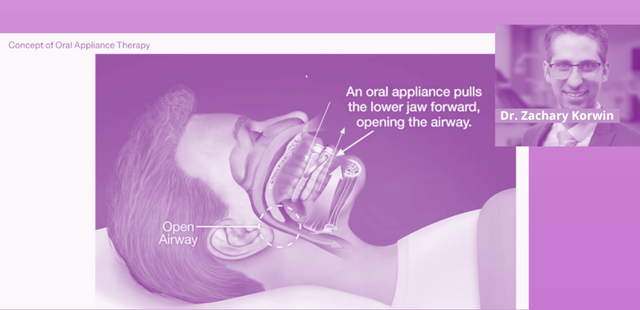
Many dentists still hear oral appliance therapy described as an “alternative” to CPAP. From a professional standards standpoint, how should dentists be thinking about OAT today—as an alternative, a primary therapy for certain phenotypes, or something else entirely—and why does that distinction matter?
The key to successful therapy is increasingly becoming clear that monotherapy is not going to be the answer for majority of persons. It’s not an A or B choice. Since sleep medicine was recognized as a subspecialty, breathing problems were identified in sleep labs by physicians, and CPAP was developed and tested in labs by sleep doctors, that therapy has been labeled and thought of as ‘gold standard’ by the physician-gatekeepers. This label/thinking persists even while studies show it treats only AHI well, and adherence falls well below 50%. The true ‘gold standard’ will include adherence as a consideration.
Dentists are the only part of medicine fully qualified to provide oral devices. The barrier is diagnosis – back to the discovery of obstructive sleep apnea. The mechanical problem was labeled a disease, although the downstream effect of the mechanics results in the true disease. Dentists should step up and claim their ability to provide patient-accepted therapy for the collapse of the upper airway, counsel their patients on the need for therapy based on understanding of the downstream effects, and collaborate with other HCP to address conditions unique to the person they are treating. Nothing is universal except dedication to finding what is unique to that person and exploring all treatment options.
More precise identification of the phenotype will allow more effective care. That includes managing the mechanics of the upper airway and evaluating the body’s response. The key is triage.
Scope of Practice: Where the Line Actually Is
There is persistent confusion around screening, diagnosing, and treating OSA. How do you clearly define the boundary between what is appropriately within the dental scope—airway screening, appliance delivery, titration—and what must remain firmly medical, and why is that distinction so important for dentists entering this space?
The border between dentistry and medicine is the greyest in sleep related breathing disorders. On the one hand, it’s a simply defined and measured change in airflow during sleep. Since this disruption has serious downstream effects, the person presents to the HCP with symptoms that are bothering their life. The symptom-treatment oriented healthcare system springs into action to address symptoms such as hypertension and insulin resistance, often without considering etiology, which the physician might have had very little training to recognize. This is especially true in early life, when breathing disorders have profound, lifelong effects on brain development and entrainment of habits.
All dentists should screen for sleep breathing disorders – that means identifying who is at higher risk based on simple signs. Current licensure restrictions mean dentists are proscribed from diagnosis of this mechanical problem. The current definition is based on an event count, which is simple to establish in a report that is uncomplicated to interpret. Similarly, even though oral device can effectively manage the events that were the basis of diagnosis, we cannot use objective testing to pronounce the treatment successful.
To understand sleep screening for Obstructive Sleep Apnea read this guide to Obstructive Sleep Apnea for Dentists
What cannot be overlooked is the financial aspect. The concept of ‘medical necessity’ guides third=party payment systems. Sleep related breathing disorder diagnoses are tied to an event count established by consensus decades ago. With no regard for symptoms or quality of life, meeting arbitrary event count levels determines whether treatment is ‘necessary’ and who pays for it. Many physicians and people have the mindset that if insurance doesn’t pay, it cannot be done. Dentists have the psychological advantage of living with such low-level benefit plans that many of our proposed treatment options are out of pocket, so dentists are used to having conversations about personal investment in health.
Layered on all this are legal aspects. With a closely drawn definition of ‘disease’ and licensure, malpractice coverage mirrors these restrictions. The dentist who strays over the line is at risk of finding themselves uncovered in the case of an adverse response. There have been complaints to regulatory bodies based on practicing out of scope of licensure – it only takes a few publicized cases to impact dentists’ behavior.
ADA Policy vs. Real-World Practice
The ADA has formally acknowledged the role of dentists in sleep-related breathing disorders, yet many dentists remain unsure how that translates into daily practice. How should clinicians interpret ADA policy in a practical, defensible way, especially when state dental boards may vary in enforcement or clarity?
ADA policy encourages all dentists to screen for SRBD and collaborate with physicians as treatment progresses. This is not controversial, but the ADA has no power to mandate dentists’ behavior. There are limitations inherent in the policy statement that have not been fully addressed, such as how to implement a screening program that has no direct reimbursement available. Messages that connect screening to later payments for services have been unsuccessful in the face of challenges getting paid from medical insurance companies.
The most powerful section of the policy statement is early treatment of children with SRBD. The main limitation of this area of health is lack of understanding of the etiology of these early SRBD by physicians. Much research and patient-centered treatment planning is being pursued by dentists, but this is a long-term project.
State Dental Boards and Risk Perception
Fear of regulatory overreach keeps many dentists on the sidelines. In your experience, where do dentists most often get into trouble with state boards in dental sleep medicine—and what are the simplest guardrails that keep practices on solid professional ground?
Reports of dentists getting in trouble with their boards generally stem from complaints by physicians who feel threatened by dentists using testing devices on patients. To my knowledge, these complaints have not resulted in any serious consequences to the dental practices.
The simplest guardrail involves the dentist carefully checking their state regulations. These change from time to time, so it pays to stay current, especially if they want to do anything more than provide oral devices (clearly allowed), such as home sleep apnea testing for titration of therapy (in some states, clearly prohibited, in many states, unclear).
Medical Collaboration: What Physicians Actually Want
From the physician’s perspective, what does a “good” dental sleep partner look like? What behaviors, documentation habits, and communication patterns build trust with sleep physicians—and what mistakes tend to damage those relationships early?
In my service area, physician perspective varies widely. One sleep doctor questioned my suggestion a mutual patient see a rhinologist for improved nasal function – “Don’t you think I would have already thought of that?” Another wondered to a patient why I needed to do an examination before providing a dental device. A sleep doc called me and asked me not to use a home sleep test device on his patients, then years later, wrote in his notes that he wanted me to test his patients while in my care and return them when I’ve achieved maximum medical improvement. The VA sleep doctors leave it up to me entirely to manage their veteran patients once the referral has been made.
I’ve made it a policy to share treatment notes and progress with the patient’s health care team for my whole career, with exceedingly rare acknowledgement of the value physicians place on these letters. During a time where software did not generate these letters, a ‘dark period’ of communication, I noted I never got a call or question from the doctors. I maintain an attitude of sharing, letting the other HCP do with the letters as they please.
In discussing this with colleagues around the country, it appears this collaborative relationship varies widely. Probably human nature to hear about the excellent back-and-forth enjoyed by some colleagues while those suffering non-communicative referral networks stay silent.
Adherence Reality: CPAP vs. Oral Appliances
Adherence data often drives the clinical conversation. How should dentists responsibly discuss CPAP compliance versus OAT compliance with both patients and physicians without sounding adversarial or dismissive of CPAP as the gold standard?
Most physicians I speak with don’t acknowledge the poor adherence to therapy widely reported in CPAP populations. Many claim their patients do very well. One value of PAP is cloud reporting, but few physicians tell me about monitoring these reports. What is true is we have only patient reports to rely on for OAT adherence. While several studies have backed these reports as trustworthy, it remains up to us to decide if the patient is accurately reporting device use. Objective data is available, but expensive, not reimbursable, and cumbersome to manage in OAT.
Success in this area will come when thinking monotherapy as the most effective means of treatment becomes less common. It’s not one or the other, especially when considering decades-long management. Perhaps the combination of cloud reporting and AI-driven data monitoring will provide more insight.
Medicare, Insurance, and the Medical Model
Insurance and Medicare are major pain points for dentists considering OSA treatment. Conceptually—not procedurally—what must dentists understand about why OAT lives in a medical model rather than a traditional dental benefits model, and how does that shift mindset change expectations?
OSA is defined as a medical problem because of the downstream effects of disrupting the respiratory system over many years. The visible effects, such as hypertension and increased cancer risk, necessitate medical oversight. The upstream etiology is not a particularly ‘medical’ problem, but current payer/regulatory conditions define the disease as it was conceived 60 years ago.
Dentists and their financial support team are used to code-based benefit systems that pay per procedure. Benefits are not conditioned on a diagnosis. Medical benefit systems demand a diagnosis and establishment of ‘medical necessity,’ a concept few dentists are trained to consider. Surgical removement of caries and repair of the defect are performed without recognizing the value of the diagnostic step because there is no requirement to document it.
For the future, dental care must move towards the medical model in requiring diagnosis prior to therapy. Say that to many dentists justifiably wary of ‘medical model’ as they observe their HCP colleagues with decreasing professional satisfaction, and resistance is high. Dentists decry the limitations in benefit plans, but there is no joy to be had in embracing the medical insurance model for dental care. What has been effectively solved is interfacing dentists with medical claim processes. Professional and trustworthy companies exist to help dentists. Unfortunately, not all service companies behave correctly – and negative stories can inhibit dentists from engagement.
Treating Without Overstepping
Some dentists worry that once they start treating OSA, they are implicitly assuming responsibility for a systemic disease. How do you explain the dentist’s role in treating the airway mechanics without assuming ownership of the disease itself?
The whole key to this lies in collaboration and communication. If the physician sends the patient to dentist and never hears anything back about care, no trust is formed. If the dentist treats airway mechanics and doesn’t report to the physician, there is a missed opportunity to build relationship. If the dentist sees their role as a device provider and does not seek to understand medical implications, they will lack vision to see whether systemic problems are addressed. Managing systemic problems is not within the scope of dentistry, but there are many that dentists routinely monitor, such as hypertension, cancer screening, even smoking cessation. Moving dentistry towards a position within primary care has a shorter route when airway problems are the focus of therapy.
Why Documentation Is a Clinical Skill
Dentists are trained to document teeth, restorations, and occlusion—not chronic medical disease. What documentation habits are most critical in dental sleep medicine to protect patients, support physicians, and withstand payer or regulatory scrutiny.
Knowing the patient, what is affecting their quality of life, and how treatment intersects with their concerns is the key. In a code-driven documentation system, a patient narrative is often given small consideration. The ‘chief complaint’ is written down, but what is important to the patient is not documented. Asking the patient ‘how does this problem affect your life?’ and ‘if the problem is fixed, how will your life be better’ go a long way to understanding motivations that can be used to increase commitment to therapy. Why is PAP adherence low? Achieving a lower AHI is only a concern of the doctor reading the test results. If PAP was linked more to improving QoL, I think adherence would improve.
It is not routine for physicians to include the patient’s dentist on encounter note distribution for chronic disease management. Since many medical EHR are connected, if a specialist wants to look at medical notes, access is easy. Among the patient’s HCPs, rarely is the dentist even listed, and dental software programs, which are not even labeled ‘electronic health records,’ do not connect with medical EHR. Accessing data is an onerous process. Since the dentist has little access to ongoing medical care, it’s easy to skip this step, even with long-term relationships, depending on patient reports of changes to medical history.
Payment systems require prescribed documentation. There are many stories of denied reimbursement due to seemingly trivial omissions of data. It takes few episodes of this frustrating situation to diminish a dentist’s enthusiasm for engaging in the process.
A Message to the Hesitant Dentist
For the dentist who believes treating OSA is important but feels overwhelmed by medicine, insurance, and regulation, what would you say to help them understand that entering dental sleep medicine is not about expanding scope—but about practicing within it more intentionally?
John Kennedy said ‘We don’t do these things… because they are easy. We do them because they are hard.’ The rewards of helping people overcome serious health challenges and vastly improving their quality of life exceed anything you’ve ever done in traditional dentistry. What appears to be an overwhelming challenge, getting paid from medical insurance, has been solved by trustworthy companies. Yes, you’ll have to pay for their services, but the cost is lower than paying to bring your finance admin person up to speed, and you’ll reap the rewards sooner. In dental school, you learned about physiology and human anatomy, but how much have you used this awesome knowledge while concentrating on oral health? Getting involved in sleep medicine allows you the opportunity to use what you know, learn many very cool things, and get paid for what you know and think about, rather than just what you can do with your hands. The old consultant’s statement ‘if the bur isn’t spinning, you’re not making money’ fades away.
You are not going to get in trouble treating people suffering from breathing problems unless you try. You can work with physicians, discovering new colleagues who care about their patient’s health like you do, and take your seat at the primary care table without risking your license or making your life unpleasantly complicated. Adding airway services to your practice is disruptive, but no rewards come without a price. Grateful people and their families provide profound rewards to everyone on your team.